
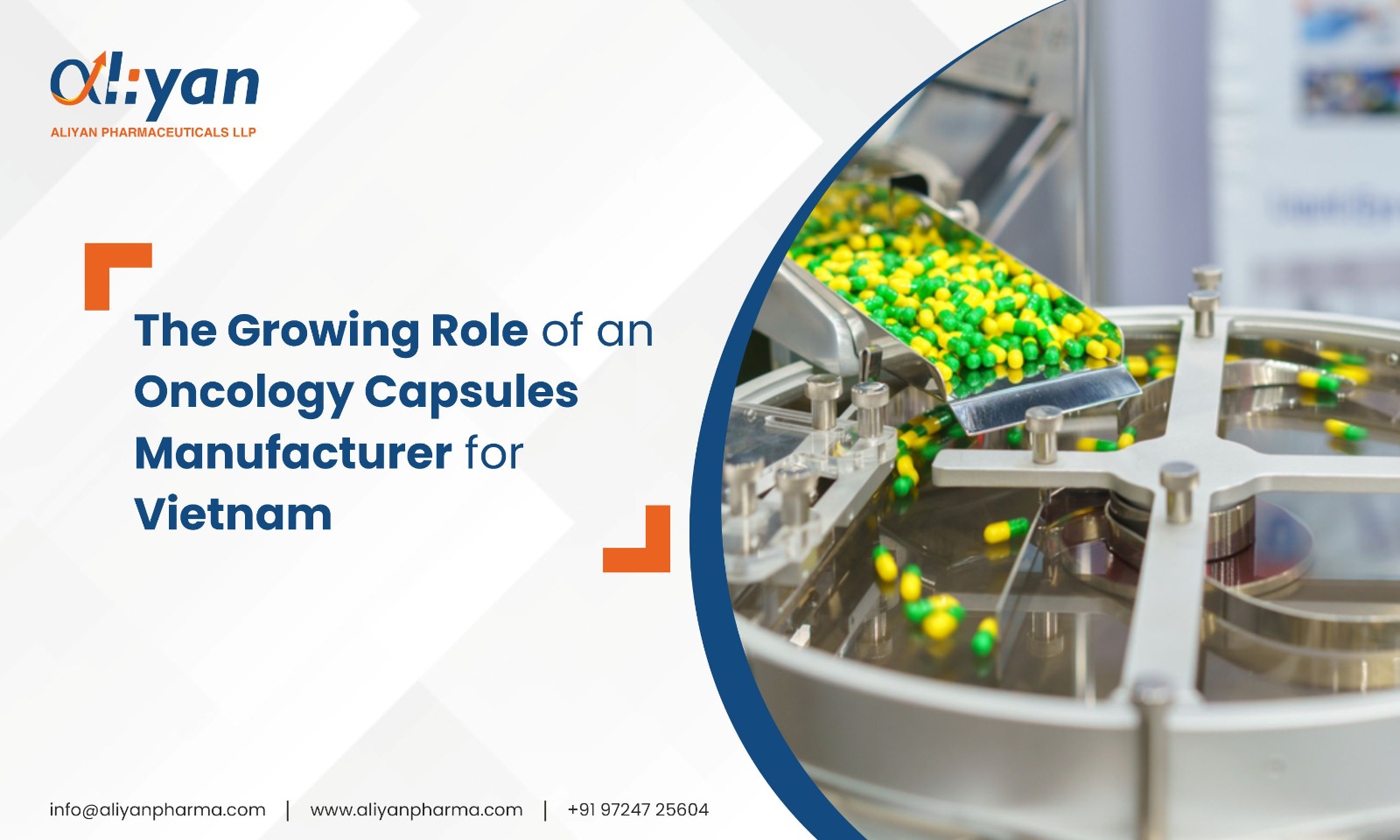
The demand for advanced cancer therapies continues to rise across Asia, and Vietnam stands out as one of the fastest-growing markets. Hospitals, clinics, and patients increasingly require reliable oral solid dosage forms that deliver precise doses of potent oncology drugs. At the center of this shift is the specialized oncology capsule manufacturer that combines strict quality systems, containment technologies, and regulatory expertise. Such manufacturers do more than fill capsules—they enable safer, more accessible treatment options for Vietnamese patients while supporting local pharmaceutical supply chains.
Vietnam’s oncology landscape has changed rapidly over the past decade. Improved screening programs, longer life expectancy, and greater awareness have led to higher reported incidence rates of common cancers, including lung, liver, breast, colorectal, and stomach cancers. Oral therapies, particularly targeted agents and supportive care medicines formulated as capsules, offer convenience and better adherence compared with intravenous options. This has created strong demand for partners capable of producing high-potency, highly uniform capsules under controlled conditions. An experienced oncology capsules manufacturer plays a critical role by ensuring consistent release profiles, protecting operators from hazardous active pharmaceutical ingredients (APIs), and meeting both Vietnamese and international quality standards.
As cancer care infrastructure expands in major cities such as Ho Chi Minh City, Hanoi, and Da Nang, the need for dependable local and regional suppliers grows. Many global cancer drug development companies are looking toward Southeast Asia for clinical trial support and commercial supply. In this environment, a capable oncology capsules manufacturer helps bridge the gap between innovative molecules and patients who need them. By offering flexible batch sizes, robust analytical methods, and full documentation packages, these manufacturers reduce time-to-market and strengthen Vietnam’s position in the regional pharmaceutical ecosystem.
Expanding Market Needs and Manufacturing Capabilities in Vietnam
Vietnam’s pharmaceutical market has shown steady growth, driven by government initiatives to improve healthcare access and encourage domestic production. Oncology products represent a high-value segment within this market. Capsules remain a preferred dosage form for many oral oncology agents because they can accommodate a wide range of fill weights, protect moisture-sensitive APIs, and allow multiparticulate or liquid-filled designs when required. An oncology capsule manufacturer serving Vietnam must therefore invest in specialized equipment such as isolators, high-containment filling lines, and advanced capsule sealing technologies.
Quality systems form the foundation of successful oncology manufacturing. Facilities that hold current Good Manufacturing Practice (cGMP) certifications and operate under ISO standards provide the assurance hospitals and regulatory authorities demand. Process validation, cleaning validation for highly potent compounds, and environmental monitoring are non-negotiable. Equally important is the ability to handle controlled substances and cytotoxic materials safely. Manufacturers that maintain dedicated suites for oncology products minimize cross-contamination risks and protect both operators and the wider production environment.
Beyond technical capability, supply-chain reliability matters. Vietnam’s geography and climate present logistical challenges, from temperature-controlled storage to efficient distribution across the country. A responsive oncology capsules manufacturer collaborates closely with local partners to ensure continuity of supply, especially for chronic therapies that patients take daily. This partnership model supports the broader goal of making modern cancer treatments more available outside major urban centers.
Quality, Compliance, and Patient Safety Considerations
Patient safety sits at the heart of every oncology product. Capsules must deliver the exact dose every time, remain stable throughout their shelf life, and release the active ingredient in a predictable manner. An oncology capsule manufacturer achieves this through rigorous raw-material testing, in-process controls, and finished-product analysis. Dissolution testing, content uniformity, and impurity profiling are standard requirements that protect therapeutic outcomes.
Regulatory alignment is another essential factor. Products destined for the Vietnamese market must satisfy the requirements of the Drug Administration of Vietnam while often also meeting standards expected by international partners. Manufacturers such as Aliyan Pharmaceuticals that maintain dossiers ready for submission and that understand both local and global guidelines reduce delays for their clients. Stability studies conducted under climatic conditions relevant to Southeast Asia further strengthen product registration packages.
Environmental and occupational safety cannot be overlooked. Highly potent APIs used in oncology require specialized containment strategies. Modern facilities employ closed-system processing, negative-pressure isolators, and advanced personal protective equipment. These measures protect workers while preventing environmental release of hazardous materials. Companies that invest in such infrastructure demonstrate a long-term commitment to responsible manufacturing—an attribute increasingly valued by healthcare providers and regulators in Vietnam.
Partnership Opportunities and Future Outlook for Oncology Capsules
Looking ahead, Vietnam is expected to continue expanding its oncology treatment capacity. New hospitals, expanded insurance coverage, and greater participation in regional clinical research will increase demand for high-quality oral solid dosage forms. An oncology capsules manufacturer that combines technical excellence with commercial flexibility will be well positioned to support this growth.
Strategic partnerships between local distributors, hospitals, and specialized manufacturers can accelerate access to newer therapies. Contract development and manufacturing organizations that offer end-to-end services—from formulation development through commercial supply—add particular value. They allow Vietnamese companies and international innovators to focus on clinical and commercial activities while relying on proven manufacturing expertise.
Sustainability and cost-effectiveness will also shape future decisions. Efficient processes that reduce waste, optimize energy use, and minimize batch failures help keep treatments affordable. Manufacturers that continuously improve yields and process robustness contribute directly to the economic sustainability of cancer care programs.
Aliyan Pharmaceuticals stands as a dedicated partner for high-quality pharmaceutical manufacturing, with particular strength in complex oral solid dosage forms. The company focuses on delivering reliable, compliant products that meet the exacting standards required for oncology applications. Through investment in modern facilities, skilled technical teams, and robust quality systems, Aliyan Pharmaceuticals supports healthcare providers and pharmaceutical partners seeking dependable capsule manufacturing solutions. Its commitment to continuous improvement and regulatory excellence positions the organization to contribute meaningfully to Vietnam’s growing oncology needs. Contact Aliyan Pharmaceuticals today at info@aliyanpharma.com to discuss your requirements.
As Vietnam strengthens its cancer care infrastructure, the contribution of specialized manufacturers will only increase. Reliable supply of well-formulated capsules improves treatment adherence, supports better clinical outcomes, and helps healthcare systems manage rising patient volumes. Choosing the right manufacturing partner remains one of the most important decisions for companies introducing or expanding oncology products in the region.
Frequently Asked Questions
What makes an oncology capsules manufacturer different from a standard capsule producer?
An oncology capsules manufacturer operates under heightened containment and cleaning standards because many cancer drugs are highly potent or cytotoxic. Specialized equipment, dedicated suites, and rigorous operator protection protocols distinguish these facilities from general pharmaceutical manufacturers.
Why are capsules preferred for many oral oncology drugs?
Capsules offer dosing flexibility, good patient acceptability, and the ability to protect sensitive APIs from moisture or light. They can also accommodate multiparticulate systems that improve release profiles or reduce local irritation.
How does a manufacturer support Vietnamese regulatory requirements?
Experienced manufacturers prepare comprehensive documentation, conduct stability studies under relevant climatic conditions, and maintain quality systems aligned with both local and international expectations, easing the registration process.
What role does containment technology play in oncology manufacturing?
Containment systems such as isolators and closed processing lines protect operators from exposure to hazardous compounds and prevent cross-contamination. This is essential for both worker safety and product integrity.
Can an oncology capsules manufacturer handle both clinical and commercial volumes?
Yes. Many specialized manufacturers offer flexible batch sizes that support early-phase clinical supply as well as large-scale commercial production, providing continuity as products progress through development.
How important is supply-chain reliability for oncology products in Vietnam?
Highly important. Patients often depend on continuous therapy. Manufacturers that maintain robust logistics, temperature-controlled storage options, and responsive production planning help ensure uninterrupted access.
The growing role of an oncology capsules manufacturer for Vietnam reflects broader trends in healthcare modernization and rising cancer burden. By combining technical capability, regulatory expertise, and a patient-centered approach, these manufacturers help translate scientific advances into practical treatments that reach more people. Continued collaboration between industry, healthcare providers, and regulators will further strengthen Vietnam’s ability to deliver high-quality oncology care in the years ahead.